Planning
A Field Notes guide to the year's darkest, most star-filled night — December 21, 2026. This guide includes a few affiliate links for gear and lodging we recommend — see our disclosure for details.
Around 3200 BCE, roughly five centuries before the first stone of Stonehenge was laid, Neolithic builders in Ireland's Boyne Valley constructed a passage tomb aligned with an almost impossible precision to a single moment: sunrise on the winter solstice. At Newgrange, a narrow opening above the entrance still channels the first light of the solstice sunrise down a 62-foot passage into the tomb's inner chamber, illuminating it for roughly seventeen minutes before the beam withdraws for another year. Nobody left instructions explaining why, but it is hard not to read it as an early, monumental answer to the same question this calendar keeps returning to: on the longest night of the year, where do you want to be standing when the dark finally breaks.
Quick Facts About the December Solstice
EXACT MOMENT | December 21, 2026, at 20:49 UTC
EVENT | The sun reaches its southernmost point, directly over the Tropic of Capricorn
NORTHERN HEMISPHERE EFFECT | Shortest day and longest night of the year; first day of winter
SOUTHERN HEMISPHERE EFFECT | Longest day and shortest night of the year; first day of summer
STARGAZING BENEFIT | Up to 15 or more hours of darkness at Northern Hemisphere mid-latitudes
BEST VIEWING WINDOW | Dusk to dawn, weather permitting
BEST HEMISPHERE | Visible worldwide, though the effect is reversed by hemisphere
About the Solstice
A solstice occurs because Earth's axis is tilted relative to its orbit around the sun, not because the sun itself moves. On December 21, 2026, at 20:49 UTC, that tilt reaches its most extreme point for the year, with the sun directly overhead at the Tropic of Capricorn, 23.44 degrees south latitude. For everyone north of the equator, this places the sun at its lowest arc across the sky, producing the shortest day and, by direct consequence, the longest night of the year.
The reverse happens south of the equator, where December 21 marks the longest day and shortest night, and the beginning of astronomical summer. Because Earth's tilt is a single physical fact affecting the whole planet at once, the solstice is simultaneously the darkest turning point for one hemisphere and the brightest for the other.
✨ One More Thing
At mid-latitudes in the Northern Hemisphere, the December solstice can deliver 15 hours or more of darkness in a single night, compared to roughly 9 hours around the June solstice. For anyone planning a night of stargazing, that is a meaningful, practical difference: nearly 70 percent more usable dark sky to work with than on the shortest night of summer.
Best Time and Direction to Look
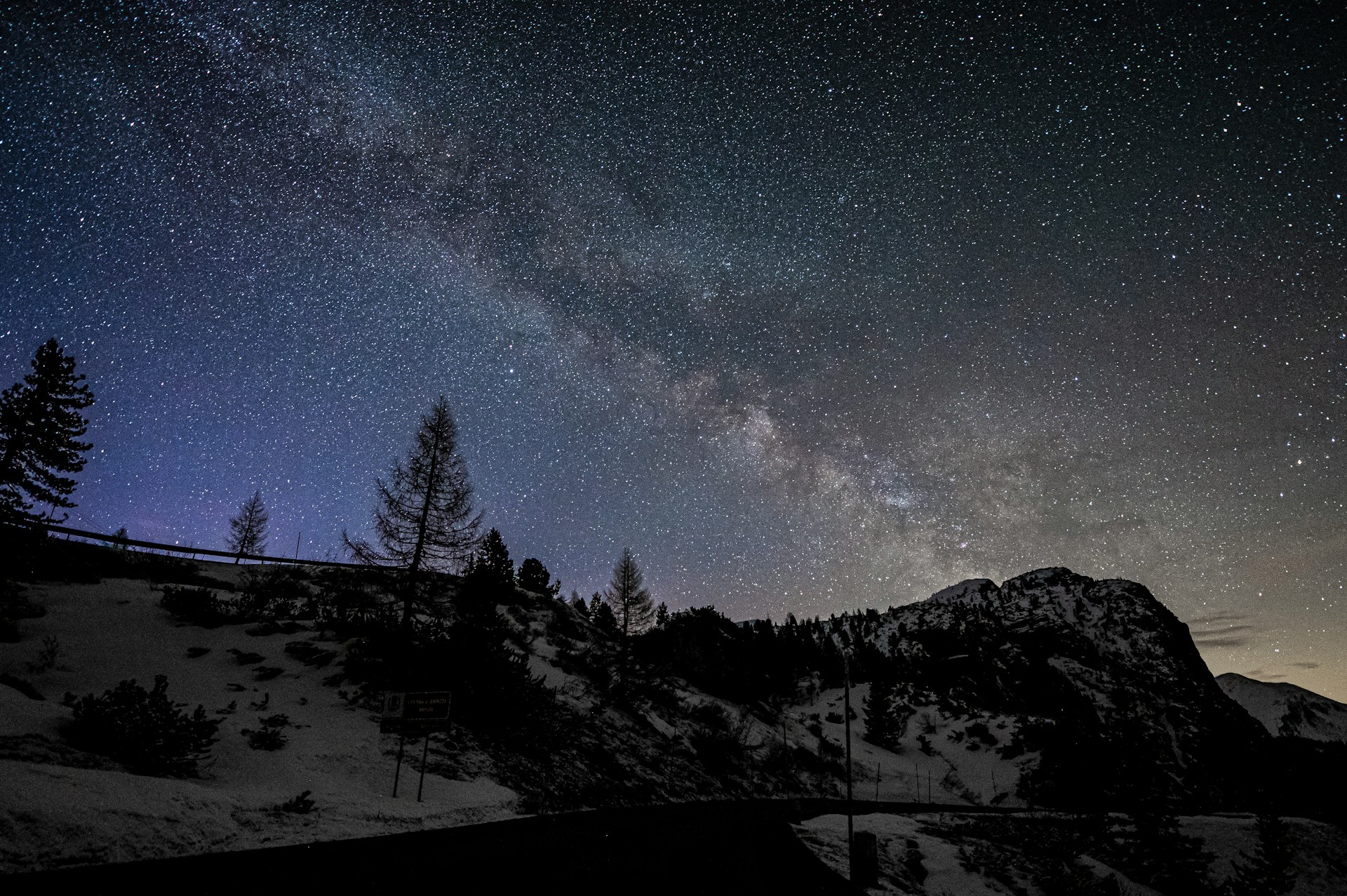
Because the solstice itself is an astronomical milestone rather than a visible event, there is no specific direction to look or moment to time a glance. The value lies in the length of the night that surrounds it. With sunset arriving early and sunrise arriving late, the entire evening through early morning window is available for observing whatever else happens to be up: winter constellations like Orion and Taurus, bright planets, or simply the Milky Way, weather permitting.
This year, the solstice also falls on the same night as the Ursids meteor shower's peak, meaning a long December 21 evening offers two reasons to be outside at once, even though a near-full moon will limit how many Ursid meteors are actually visible.
Photographing the December Solstice
The solstice itself is not a visible object, but the sheer length of the night makes it one of the best opportunities all year for star trail photography, a technique that turns Earth's rotation into art. Point a camera at the celestial pole, Polaris for Northern Hemisphere viewers, mount it on a tripod, and set an intervalometer to fire a continuous sequence of 30-second to 4-minute exposures at a moderate aperture and low ISO, for as many hours as you can manage. Later, stacking software combines the individual frames into a single image showing the stars as concentric arcs circling the pole.
A genuinely full circular star trail, where the arcs form a complete ring, typically needs somewhere in the range of 6 to 8 hours of continuous exposure. With up to 15 hours of darkness available on the solstice night, this is one of the only nights of the year where that is realistically achievable without cutting the sequence short at dawn.
Best Places to Experience the Solstice Night
Because this night is defined by darkness itself rather than a single object to find, the picks below lean toward latitude and duration: the farther north, and the more darkness available, the more this particular night has to offer.
Kakslauttanen Arctic Resort, Finland
Set well above the Arctic Circle, this property experiences an extreme version of the solstice effect, with the sun barely rising at all in December. Its glass igloos are purpose-built for long nights of sky-watching in serious cold. Visible worldwide, with the effect reversed for Southern Hemisphere guests.
Any high-latitude Northern Hemisphere location
The farther north the location, the more extreme the length of darkness becomes, making high-latitude destinations especially rewarding for stargazers seeking maximum night-sky time on this date.
A familiar dark-sky spot, extended
Because this is fundamentally a night defined by its length rather than a single event, an already-favorite dark-sky location becomes even more valuable, simply because there is more darkness available to use.
Where to Stay
This is one of the few nights on the calendar where the destination itself, not just the sky, can be the point: extreme-latitude lodging built specifically for long polar darkness offers an experience no amount of equipment can replicate elsewhere. We still cover the full range, for travelers who want that full Arctic commitment and for those who simply want to extend a familiar dark-sky trip.
• Arctic Glass-Roof Cabin: [Affiliate placeholder — a high-latitude property designed for extended night-sky viewing from indoors]
• Remote Dark-Sky Camp: [Affiliate placeholder — off-grid lodging for maximizing the year's longest dark window]
• Budget-Friendly Stargazing Stay: [Affiliate placeholder — value lodging within driving distance of a dark-sky site]
⚠ Safety Note: High-latitude solstice destinations like Arctic Finland or Lapland combine genuinely dangerous cold with very short daylight hours for travel and recovery if anything goes wrong. Dress in layers rated for the specific temperatures of your destination, not just "winter," carry a charged phone and a physical backup plan if you are heading somewhere remote, and let someone know your itinerary and expected return time before heading out for an extended night outdoors.
What to Bring
The single biggest lever tonight is simply respecting how long you plan to be outside. This is the longest night of the year, and the gear that matters most is whatever keeps you warm and comfortable for hours, not minutes.
• Serious cold-weather layers: The solstice falls at the coldest point of the year in much of the Northern Hemisphere, on top of an unusually long night outside; a genuine expedition-grade piece like the Canada Goose Expedition Parka is built for exactly this. [Gear affiliate placeholder]
• A star chart or astronomy app: With so much dark sky available, a guide to winter constellations helps make the most of the extended window. [Gear affiliate placeholder]
• A thermos and warm food: A long night calls for sustained comfort, not just a quick trip outside. [Gear affiliate placeholder]
• Red light flashlight: Useful for reading star charts without disrupting night vision over many hours outside. [Gear affiliate placeholder — dedicated red-light category coming soon]
Frequently Asked Questions About the December Solstice
Is the solstice something I can actually watch happen?
Not directly. The solstice is the precise moment Earth's tilt reaches its most extreme angle relative to the sun, an astronomical milestone rather than a visible event. What is observable is the unusually long night that surrounds it.
Why is this the shortest day in the Northern Hemisphere but the longest in the Southern Hemisphere?
Earth's axial tilt affects the whole planet at once, but in opposite ways depending on hemisphere. When the Northern Hemisphere is tilted away from the sun, producing its shortest day, the Southern Hemisphere is tilted toward it, producing its longest.
Does the solstice affect meteor shower visibility?
Indirectly, yes. Longer nights simply provide more hours of darkness in which to observe any shower active around this time, including the Ursids meteor shower, which peak on the same night in 2026.
Is the solstice date always December 21?
It shifts slightly year to year, typically falling between December 20 and 22, depending on the specifics of Earth's orbit and the calendar's leap year cycle.
How do I convert this to my own time zone?
UTC doesn't shift with the seasons, so the math is simple: subtract 5 hours for Eastern Time, 6 for Central, 7 for Mountain, or 8 for Pacific during standard time, one hour less when daylight saving is in effect. Outside the U.S., searching "8:49 p.m. UTC in [your city]" converts it instantly.
Final Thought
There is no flash of light to catch on the solstice, no radiant to track across the sky. What this night offers instead is simply more of the dark itself, the longest single stretch the Northern Hemisphere sky has to give all year. For anyone willing to bundle up and use it, that is its own kind of gift. If you are already outside for it, the Ursids meteor shower and the year's strongest run of winter darkness continue right through to the Quadrantids in early January.
[Internal link placeholder — Plan Your Solstice Night / View the Full December Sky Calendar]
Related Events
• Ursids Meteor Shower: A quiet, circumpolar meteor shower peaking the same night, December 21, 2026.
• Geminids Meteor Shower: The year's strongest meteor shower peaked earlier the same month, on December 13, 2026.
• Quadrantids Meteor Shower: The year's sharpest, shortest meteor peak arrives January 3, 2027.
Facts and figures in this guide are cross-checked against NASA, the International Meteor Organization, and the American Meteor Society, and updated as new forecasts are released.
Written by Teresa Holden, founder of Stargazing Resorts.